TI/133D Oil Storage Tank Risk Assessment
The TI/133D is OFTEC's Technical Information form for assessing whether a domestic oil storage tank needs secondary containment (bunding) and fire protection. It evaluates spillage risk (proximity to watercourses, drains, and environmentally sensitive areas) and fire risk (separation distances from buildings, boundaries, and combustible materials). The assessment determines if the existing tank installation is compliant or needs upgrading.
Sample TI/133D certificate
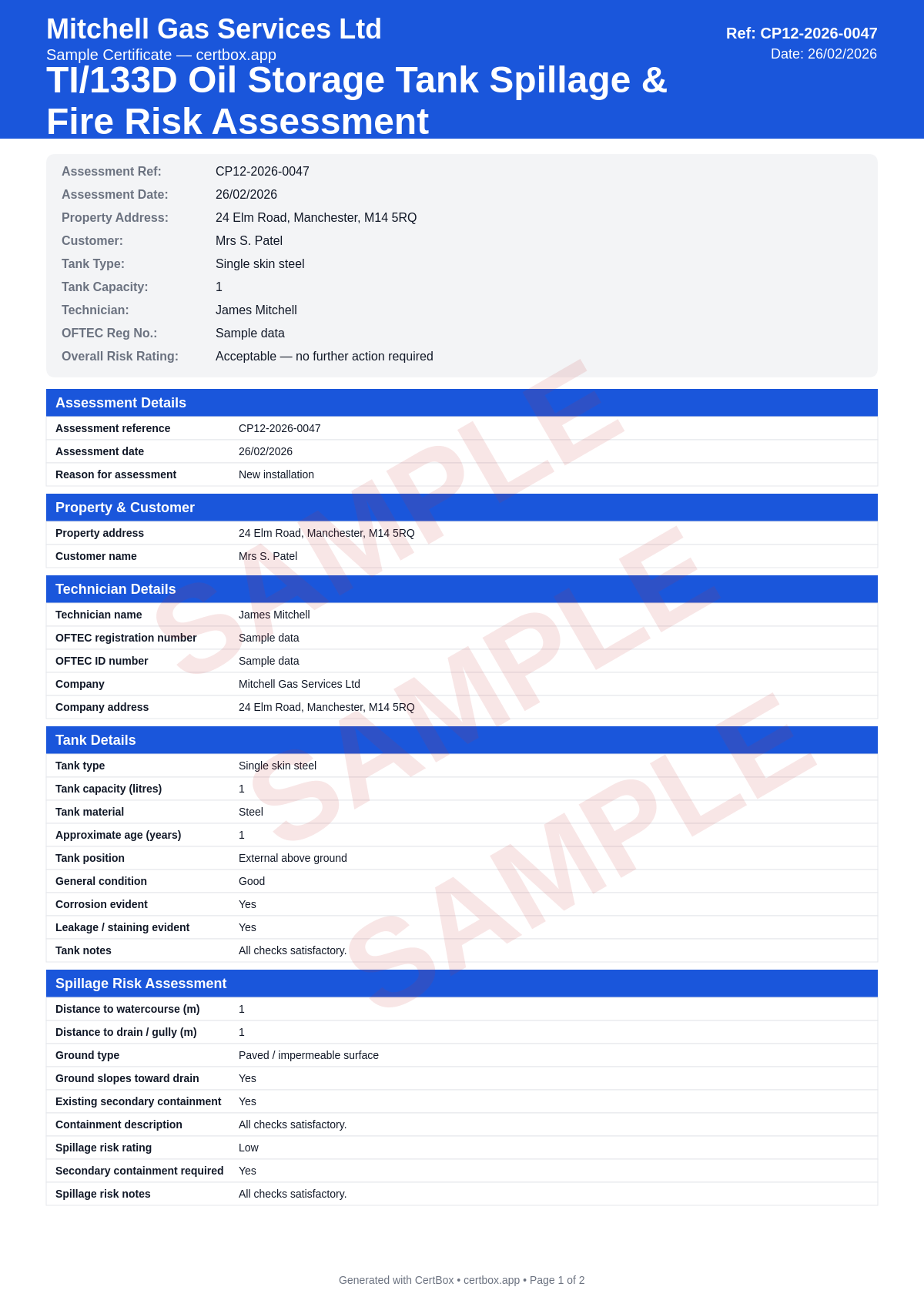
Sample TI/133D with fictional data. All personal details shown are fake.
What it covers
- Tank specification (type, capacity, age, material)
- Spillage risk assessment (watercourses, drains, ground conditions)
- Existing containment measures
- Fire risk assessment (building distances, boundaries, combustibles)
- Risk rating and upgrade recommendations
- Compliance with oil storage regulations
Who needs a TI/133D?
Create your TI/133D with CertBox
Fill in the form
Pick TI/133D from the list, fill in the fields on your phone.
Compliance checks run
Built-in validation catches missing fields and out-of-range readings.
PDF generated instantly
Professional PDF ready to share via secure link or download.
Frequently asked questions about TI/133D
When is a TI/133D assessment required?
Does my oil tank need to be bunded?
What are the separation distances for fire protection?
Related certificates
CD/10
Create OFTEC CD/10 oil firing installation completion reports on your phone. Commissioning readings, tank compliance, Building Regs notification.
Gas EngineersOil Service Record
Create oil boiler service records on your phone. Combustion analysis, nozzle replacement, tank inspection. PDF ready in minutes, no paperwork.
Gas EngineersCD/12
Create OFTEC CD/12 landlord oil safety check certificates on your phone. Annual inspection for rental properties with oil heating. PDF in minutes.