Septic System Inspectors Create in CertBox
Septic System (OWTS) Inspection Report
A Septic System (OWTS) Inspection Report documents the condition of an existing onsite wastewater treatment system, including tank and component checks, scum/sludge measurement, and an overall condition assessment. Commonly used for point-of-sale, routine maintenance, and complaint/failure investigations.
State/local OWTS regulations; commonly follows the NAWT (National Association of Wastewater Technicians) inspection protocolValid: One-off (condition report, no expiry)
Sample Septic Inspection Report certificate
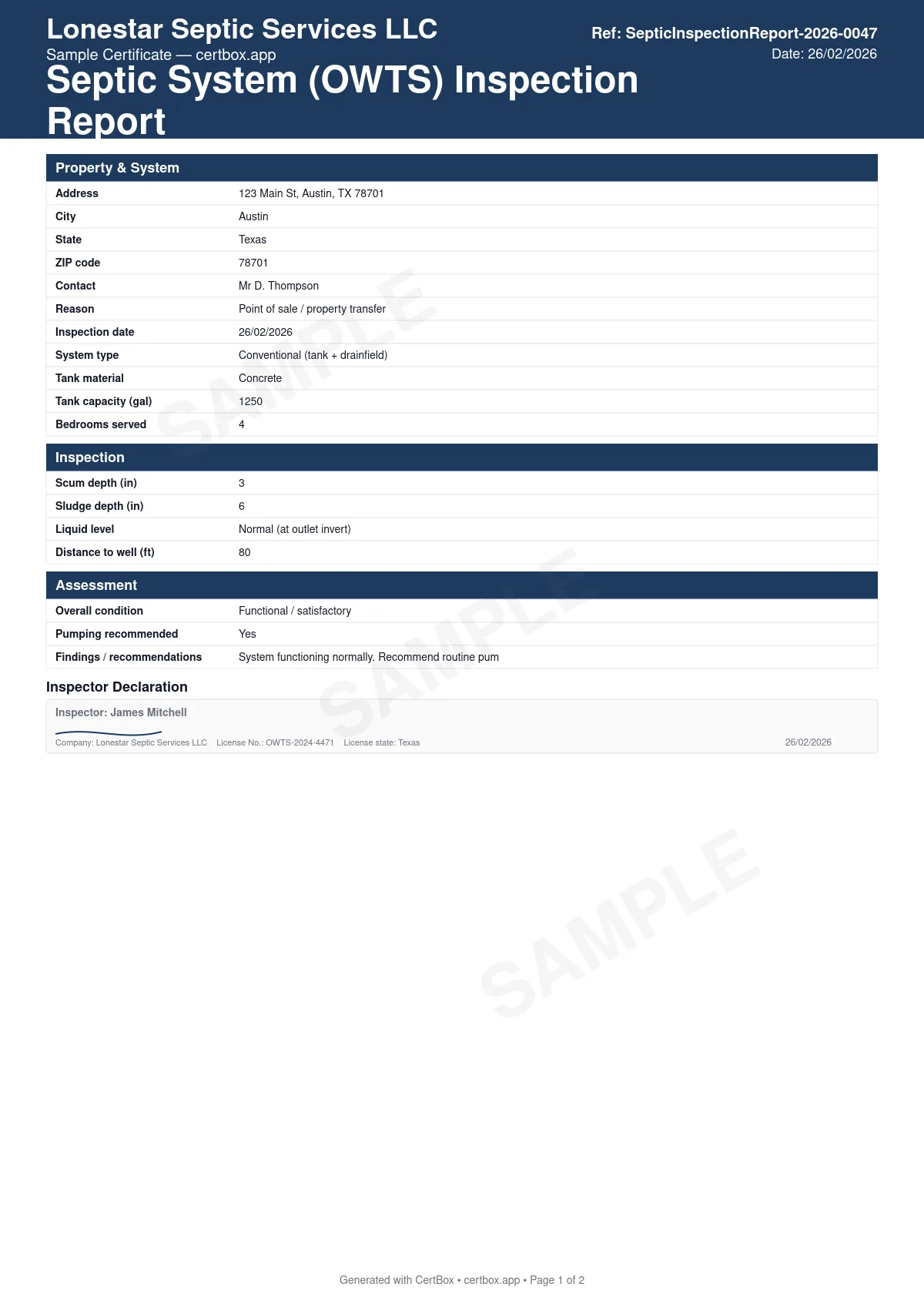
Sample Septic Inspection Report with fictional data. All personal details shown are fake.
What it covers
- Reason for inspection (point-of-sale, routine, complaint, or permit)
- System type and tank condition
- Scum and sludge depth measurement
- Component checks: baffles, effluent filter, pump, alarm, drain field
- Overall condition and pumping recommendation
Who needs a Septic Inspection Report?
Home buyers and sellers
Real estate agents
Homeowners (routine maintenance)
Septic service companies
Create your Septic Inspection Report with CertBox
1
Fill in the form
Pick Septic Inspection Report from the list, fill in the fields on your phone.
2
Compliance checks run
Built-in validation catches missing fields and out-of-range readings.
3
PDF generated instantly
Professional PDF ready to share via secure link or download.
Frequently asked questions about Septic Inspection Report
What does a septic inspection check?
A typical onsite wastewater treatment system inspection — commonly following the NAWT protocol — measures the scum and sludge layers in the tank, checks the tank structure and inlet/outlet baffles, tests any pump and high-water alarm, and inspects the drain field for signs of failure such as ponding, surfacing effluent, or odor.
How often should a septic tank be pumped?
A commonly cited rule of thumb is every 3 to 5 years, though the right interval depends on tank size, household size, and usage. Many inspectors recommend pumping once the combined scum and sludge depth approaches roughly a third of the tank's liquid depth, or when clearance from the outlet baffle drops below about 3 inches.