Fire Safety Contractors Create in CertBox
Smoke & Carbon Monoxide Alarm Certificate
This certificate documents inspection and testing of a dwelling's smoke and carbon monoxide alarms to NFPA 72 — device type, technology, power source, interconnection, expiration and test result recorded device by device, with required coverage and overall result confirmed.
NFPA 72 (household smoke/CO alarm requirements, Ch. 29); state/local point-of-sale and installation ordinances varyValid: Per stated reason (point of sale/tenancy: one-off; periodic: per local ordinance)
Sample Smoke/CO Alarm Cert certificate
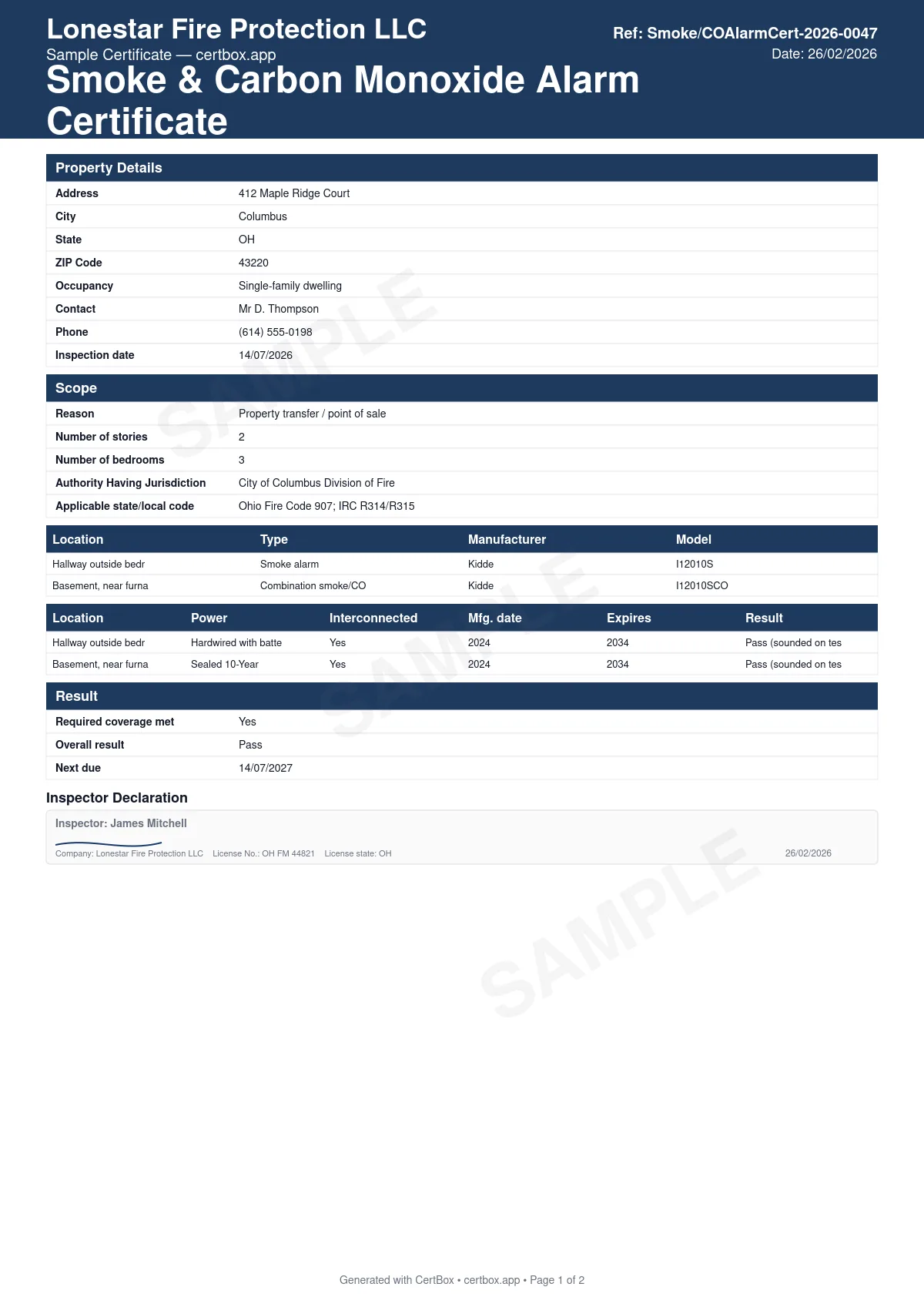
Sample Smoke/CO Alarm Cert with fictional data. All personal details shown are fake.
What it covers
- Occupancy type, stories and bedrooms
- Reason for certificate and applicable local code
- Device type, technology, power source and interconnection per alarm
- Manufacture/expiration date and test result per device
- Required coverage assessment and overall result
Who needs a Smoke/CO Alarm Cert?
Landlords and property sellers
Property managers
Home inspectors and fire alarm technicians
Tenants and buyers
Create your Smoke/CO Alarm Cert with CertBox
1
Fill in the form
Pick Smoke/CO Alarm Cert from the list, fill in the fields on your phone.
2
Compliance checks run
Built-in validation catches missing fields and out-of-range readings.
3
PDF generated instantly
Professional PDF ready to share via secure link or download.
Frequently asked questions about Smoke/CO Alarm Cert
Where must smoke and CO alarms be installed?
NFPA 72 requires a smoke alarm in each sleeping room, outside each separate sleeping area, and on every level of the dwelling (including basements); carbon monoxide alarms are required outside each sleeping area (and within a bedroom that has a fuel-fired appliance) in dwellings with a fuel-fired appliance or an attached garage.
Does a private inspection satisfy my state's point-of-sale requirement?
Not always — some jurisdictions require the compliance certificate for a property transfer to be issued by the local fire department itself (for example, Massachusetts under MGL c.148 §26F½), not a private inspector. Check your local ordinance before relying on this record for a sale or tenancy change.
How old can a smoke alarm be before it must be replaced?
NFPA 72 requires smoke alarms to be replaced no later than 10 years from their date of manufacture (stamped on the unit), regardless of installation date or test results; CO alarms are commonly replaced every 5–7 years per the manufacturer's instructions.