Drainage Engineers Create in CertBox
Septic Tank Installation Certificate
A Septic Tank Installation Certificate confirms that a septic tank or sewage treatment plant has been installed in compliance with BS 6297, Building Regulations Part H and the environmental regulator’s rules (the general binding rules in England). It covers tank sizing, soakaway design, percolation test results, and Environmental Permit status.
General Binding Rules for small sewage discharges (England), BS 6297, Building Regulations Approved Document H, Environmental Permitting Regulations 2016Valid: One-off (annual emptying/inspection recommended)
Sample Septic Tank Cert certificate
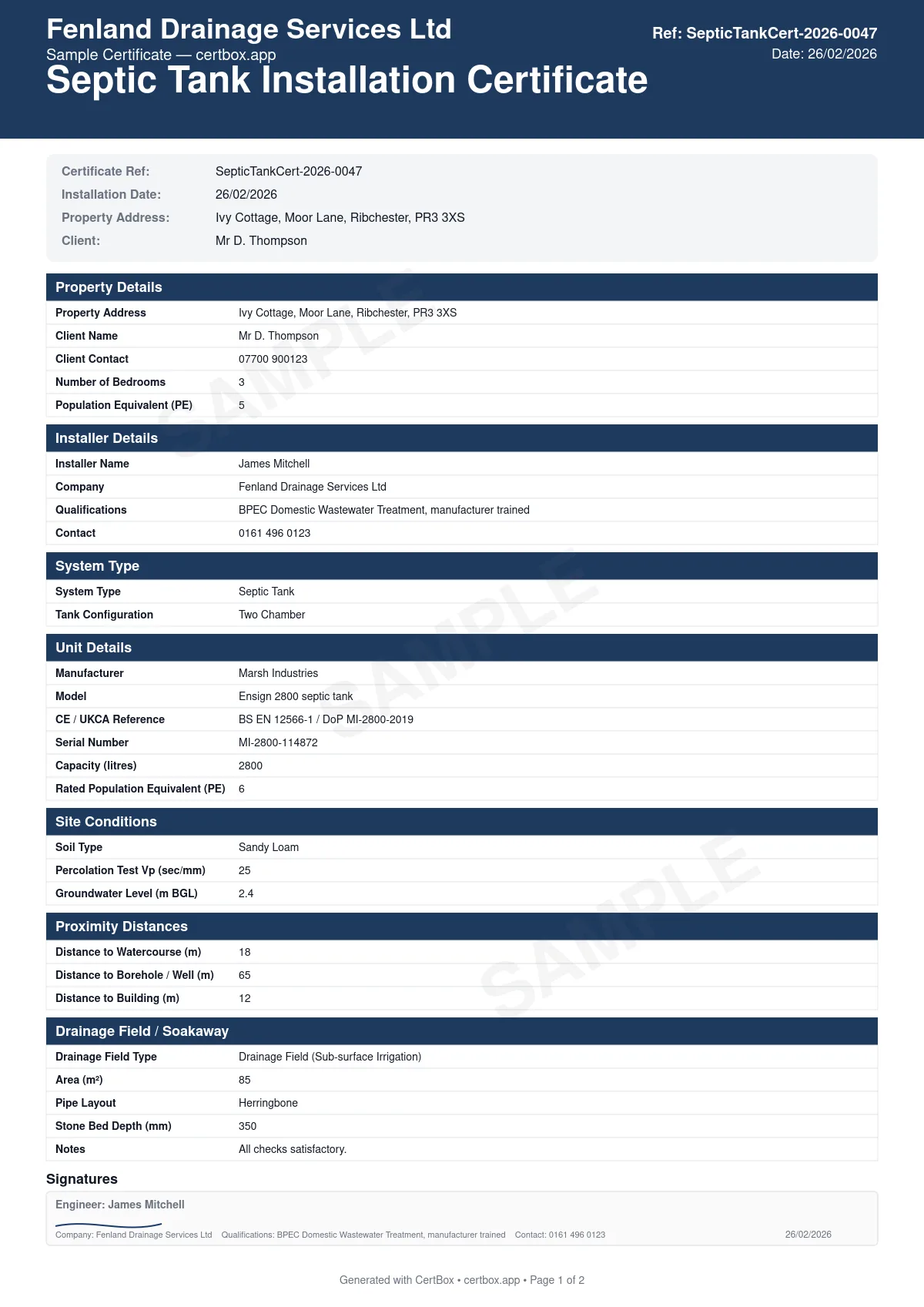
Sample Septic Tank Cert with fictional data. All personal details shown are fake.
What it covers
- Tank type, capacity, and manufacturer
- Percolation test results
- Soakaway/drainage field design
- Distance from watercourse and boundaries
- Building Regulations approval status
- Environmental Permit or binding rules compliance
Who needs a Septic Tank Cert?
Rural homeowners
Property developers (off-mains drainage)
Self-builders
Agricultural premises
Create your Septic Tank Cert with CertBox
1
Fill in the form
Pick Septic Tank Cert from the list, fill in the fields on your phone.
2
Send the PDF
Download it, email it to your customer or share a link. Sending is the part you pay for.
Frequently asked questions about Septic Tank Cert
Do I need permission to install a septic tank?
You need Building Regulations approval for all new septic tank installations. In England, under the general binding rules, a septic tank that discharges directly to a watercourse must be connected to a public sewer, replaced with a small sewage treatment plant, or given a drainage field. You may also need an environmental permit. Wales, Scotland and Northern Ireland have their own regulators and rules.
What is the difference between a septic tank and a treatment plant?
A septic tank provides primary settlement only and must discharge to a drainage field (soakaway). A sewage treatment plant includes secondary biological treatment and can discharge to a watercourse with the appropriate permit. Treatment plants are required where no drainage field is viable.